This article was originally published in URISA’s The GIS Professional Issue 288
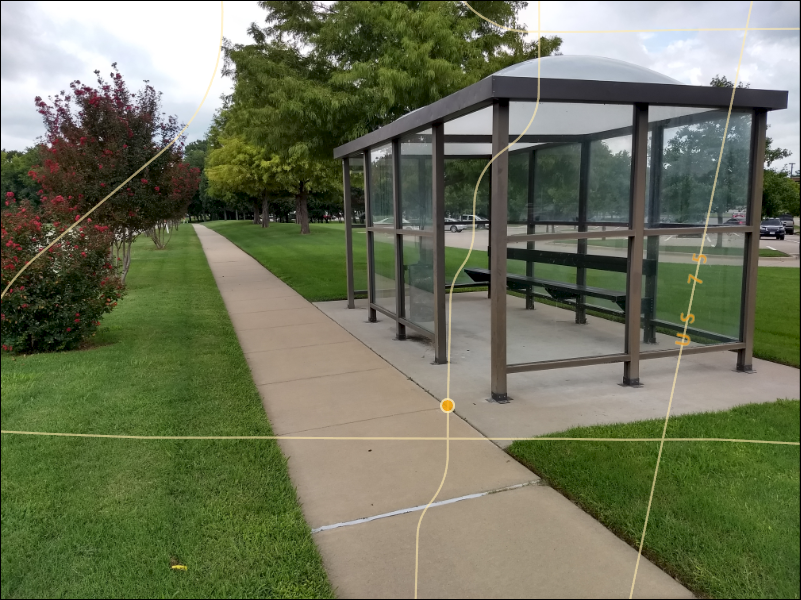
Düsseldorf, Germany 2008: Franz-Josef Göbel, chairman of the aid organization Alte Löwen (Old Lions), helps to pioneer the first “phantom stop”. This device, both humane and revolutionary, addresses the issue of patients with neurodegenerative disorders wandering away from care facilities. A decoy bus stop. Disoriented patients will find their way outside the care facility, spy the bus stop, sit there, and wait. And wait. In an area of the world with robust public transit, the natural assumption is that the bus will come; that it doesn’t, creates an invisible corral where patients feel secure and in control of their ultimate terminus. There a person waits, letting their body cruise in autopilot as their mind embarks on travels that likely they’ll never make. Here they idle until a facility worker can tow them back, or they return of their own recognizance. Physical restraints are replaced by mental roadblock and immobilizing straps now become a pilgrim’s mirage, mistaking journey for destination. The trajectory of our own professional development can often be de-railed through similar illusions of security– –enclosures of complacency.
The Longest Wait
Finding my first job was a Sisyphean task. Tailoring my applications and cover letter for the hopes of getting an interview, interviewing, and then, radio silence. In those days of desperation, the idea of breaking into the industry seemed mythic. Eventually, I landed an opportunity digitizing cadastral records.
For the first time in my adult life, I had a semblance of stability. Naturally, I immediately mapped out a life plan. Eerily, it looked similar to the expectations for any employer’s fabled entry-level position:
- 3-5 years’ experience
- Web/Server knowledge
- Programming expertise in multiple languages
The issue, as I came to realize it albeit several years later, was that I had done very little to achieve any of these goals. Other than, of course, waiting. I went to work every day, left at the end of my shift, and spent the weekends laid about, as if I deserved nothing more than to rest after a week’s worth of mind-numbing work.
This realization came quite unexpectedly when the company for which I worked had several bouts of hiring. Fortunately, I had a boss who saw value in both delegating and the collaborative process. We were expected to sift through the hundreds of applications submitted, rank applicants based on our own personal subjective scale, and then reconvene with a final vote as to who should get invited to interview in-person. This consensus hiring continued into the interviews, which were an entirely different creature. Often, those that had the most experience on paper could not articulate core technical concepts outside of their daily wheelhouse. When asked about their motivation or future aspirations, the response was something habitual about “liking to make maps”, “enjoying the cartographic process”, or “being good with computers”. I suppose it is somewhat difficult to get excited about cadastral record-keeping; however, I imagined myself on the other end of the interview process and found my own answers to be equally lackluster.
I had been spoiled with a promotion a year since my initial hiring but this forward momentum began to falter after our manager left. A replacement was appointed from within our team without a competitive process– –which was not unusual considering the size of the company and the relatively clear lines of hierarchy. Team consensus was abandoned, new positions were opened and appointed. Suddenly it seemed that the metaphorical emergency brake had been applied full force. The months dragged on. I watched as my more ambitious peers moved on to other companies.
I felt bound by my own lack of imagination. I had spent years grinding away, gaining “experience”, but in reality, I had done very little to progress. I found myself at my own phantom stop. I had been pacified by the monotony of my own work, sitting at my desk imagining that each day brought me closer to advancement, the next job, a corner office with a placard on my desk. The harsh reality was that the bus I was waiting for was no longer running; that line had ceased regular service even before our profession was defined by a graphical user interface. The idea that somehow being next in line, or that time served was enough to propel a career, to a destination that I hadn’t even bothered to articulate, was an illusion born of inexperience and wishful thinking
Forward Progress
Identifying a problem is not a solution in itself, but it does allow you to formulate a remedy. I began interviewing. Admittedly, interviews were much easier to acquire with the requisite years of experience that I had gained to date. Having been on the driving end of several dozen interviews, the exchange seemed more mundane as I better-understood business requirements and their relation to spatial technologies. At that point in my career, it would be disingenuous of me to say that I understood accurately how to treat the malaise of idleness.
Frankly, it was not until my current position that I began to adequately conceptualize habits that contribute to forward progress. As much as I appreciate a top ten list, for me, there are only two salient actions: getting your foot in the door and being able to make an impact once you’re there; or in other terms, pairing networking with research and development. Previously, I had stumbled on elements of each but never had pursued the broader themes in any deliberate sort of way. As a consultant, my job was essentially to network. Learn their name, understand the situation from their perspective, solve problems, smile when you talk, be both pleasant and approachable. Our services were on retainer, no penalty contracts; we retained clients based on how we treated them.
The idea of attending professional events, presenting at conferences, writing articles, or setting up a regional Slack channel, is deeply unnerving to me. Almost mechanically, I force myself outside of my comfort zone; ask questions at the end of presentations, introduce myself to strangers, keep business cards on hand, and practice my 10 second response to “what do you do in your position?”. The result is somewhat comical as I battle to hear myself and others over a pounding heart, rushing blood, and a near constant stream of internal dialogue. This a set of skills that I neglected to develop outside of a professional client-consultant relationship; however, it is something that can be taught and learned. Maintain eye contact, don’t overpower a group conversation, and be comfortable with listening.
Rote actions will appear as hollow as they feel when they lack appropriate intent. A hammer for the sake of the object itself is only a showpiece; the utility materializes in the presence of a nail. When meeting new people, or reconnecting with acquaintances, my goal is always to learn. Every individual has expertise gained through virtue of their position, their work environment, and their life experiences. People are generally interested in discussing things that they know; in most cases, people will discuss themselves. This dynamic works well with patience, practice, a few leading questions, and an easy pivot. “What are you hoping to implement in the near future”, “what’s been the most challenging project”, “how did you implement that”, and “why is that”. Cultivating a genuine desire to explore and discover the stories of others has catalyzed my new conception of networking.
Additional positions were predicated on some of the unique experiences that I had acquired as part of the official workday at my first job. Client site visits for sales and installations, web service administration and application building, and some light automation. It was beyond fortuitous that a first position would span such a wide vertical integration of skills; the second position was far narrower. The pay was better but contractual, the company was national, and suddenly I felt expendable. The notion of a “safe” job had evaporated, along with it, my complacency. I began spending all my free time developing the traits that made me marketable.
Destination Ahead
My research and development (R&D) time was exclusively during lunch hours. Although restricted to the technology that the organization currently used, I was more than free to use our software to test new workflows, run different analyses, and prepare articles and presentations. Outside of specific software applications, I organized my lunch hours around interesting webinars and explanatory YouTube videos covering a variety of topics. And I read. Constantly. The wide availability of both digital and print materials makes most subjects accessible to those that are willing to spend the time to seek them out.
Sacrificing personal time and pursuing R&D outside of working hours has several distinct advantages. Chief among them, working with other software and versions that are unapproved. In the Esri realm, your organization may not have certain extensions or be several years behind the current software release. An ArcGIS Home-Use license costs $100 per year and comes fully loaded with all extensions, allowing the ability to hone skills that you would not otherwise have access to, and remain on the cutting edge of functionality. Outside of Esri products, there is an entire world of spatial technology not commonly used in American workplaces. QGIS is free and delivers the most up-to-date spatial functionality, including working in 3D; it also natively uses modern file formats like the GeoPackage. Moving beyond graphical interfaces, any sort of programming is made easier with unfettered admin rights. Python and R deliver incredibly fast, capable, and visual solutions to geospatial problems; paired with Project Jupyter, programming is becoming more collaborative and approachable to a wider audience.
As providence would have it, my current position quickly followed my second. Here, my interests are closely aligned with those of the organization: use spatial technologies to enable efficiencies and analysis-driven decisions. I had spent years effectively sitting on a bench, waiting for something to come and deliver me to a future that was nebulous and undefined. When I finally woke from my self-induced daydreams, I was startled into action, but without a clear destination in mind. I wasn’t sure where I wanted to go, but I had an idea of the skills that I would need to be successful.
My current organization is aggressively pursuing a transformation into a High Performance Organization (HPO). As such, opportunities abound to study organizational dynamics, performance, and agility. Among other things, this has impressed upon me the importance of a structured R&D program for employees. The idea that knowledge workers are only as effective as the knowledge that they possess, makes imperative the continuing acquisition of knowledge and skills. Today’s high-octane pace of technological change argues that the stagnant mind becomes increasingly outdated and obsolete. Hiring an employee without a training infrastructure is akin to purchasing a vehicle without a thought given to refueling it. The cost of doing business includes investing in the continuous education of your workforce. Acceptance of this new reality, like many things, is a spectrum. While few of us may be in a position to dictate organizational policies, we all have the agency to pursue personal growth and influence others through our example.
My journey continues. Within my team, our measures of success involve setting aside time for R&D; we use the term “Q2”, short-hand for Quadrant 2 from the Eisenhower Matrix and are expected to dedicate a minimum of 10% of our working hours towards this goal. In addition to this, I still set aside my lunches for reading and webinars. The more that I learn, the better idea that I have about what else I should know. And the wider that I branch out, I find myself less satisfied with my current level of expertise.
In life, destinations require planning and measurable effort. The bus isn’t real. There does not exist a vehicle, actual or metaphorical, that will spirit you away into a rosy and productive future. Our personal phantom stops may not be physical but their effects are tangible. Often times it is difficult to discern these mental decoys because they are so comfortable. We’re bored. Cruising on autopilot. Waiting passively for something to happen for us. At the heart of this illusion of security, a lack of skills development and refusing to learn from others. While these mental enclosures may be a figurative shelter of sorts, the world continues moving forward. And the complacent wait. And wait.
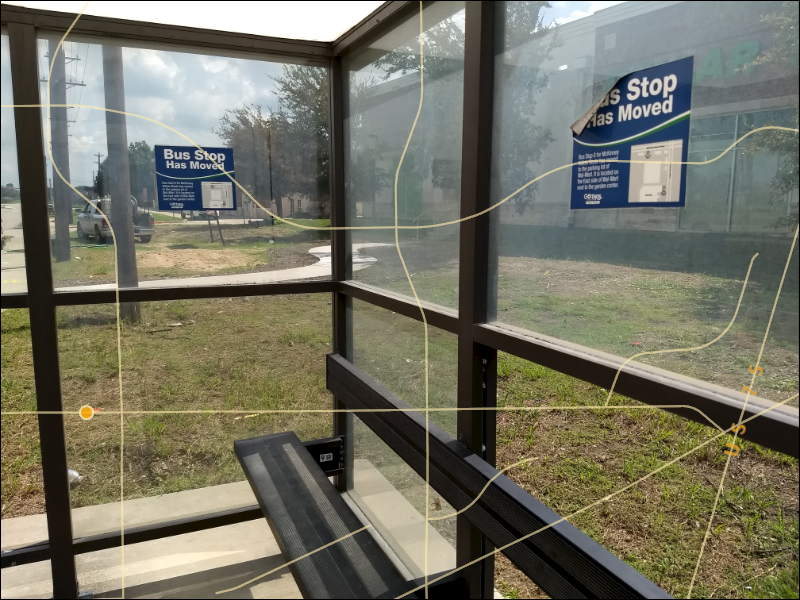
Unintentional Phantom Stops a Photo-Map Collection by Jordan Carmona, GISP
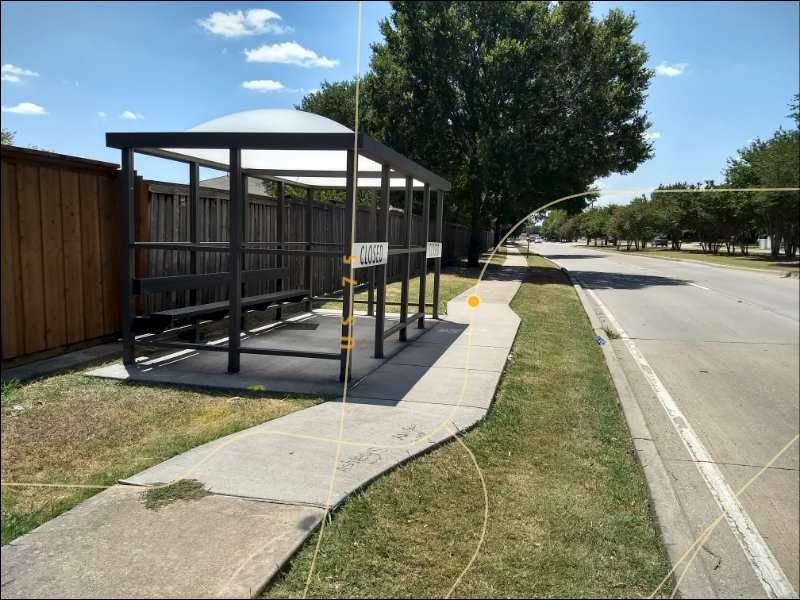
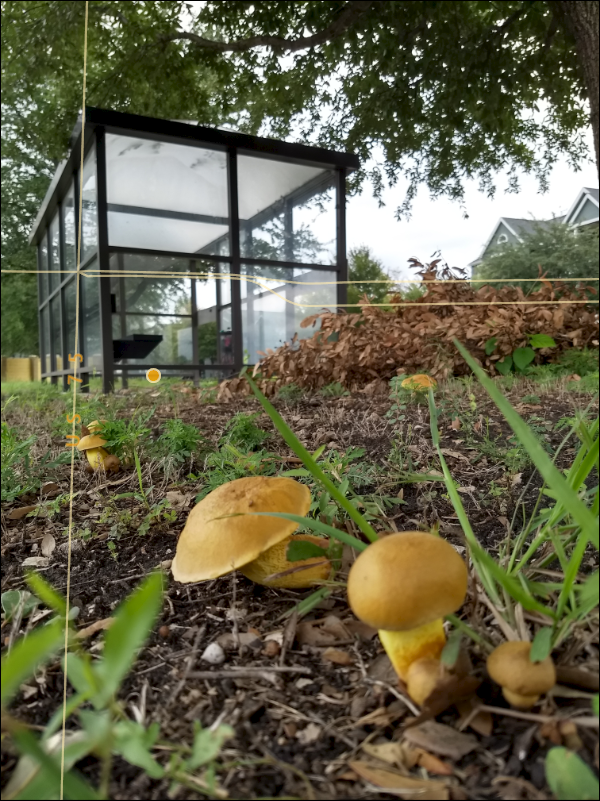
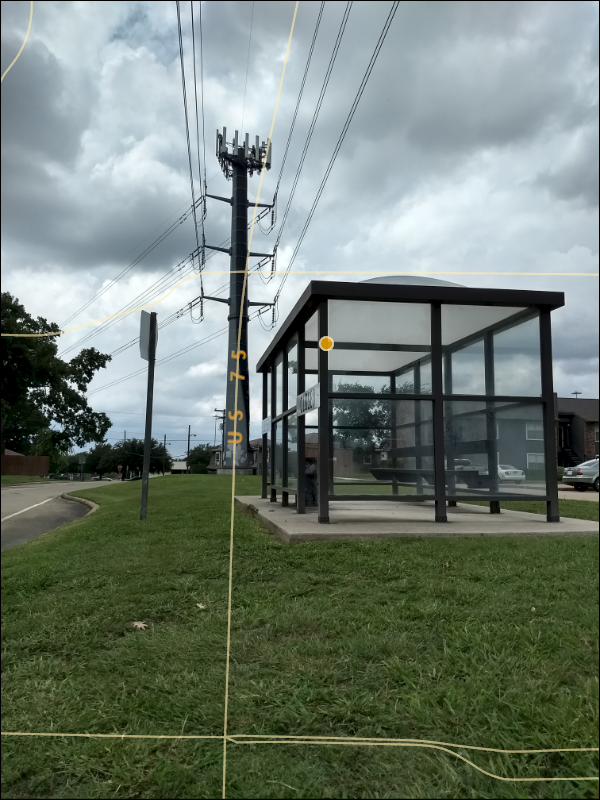
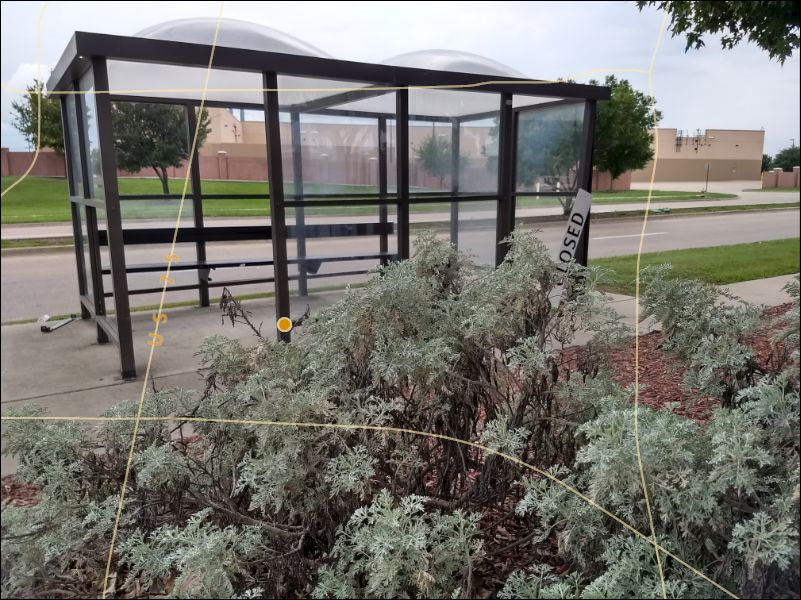
Here are a series of transit shelters throughout the city that currently sit unused. They are in different stages of disrepair, depending on the area of town and stewardship by adjacent property owners. On my commute, I pass the same shelter. I continue to be surprised by the feelings of loss, desolation, and longing that it evokes. That became the seed that grew into words. With the passing of conventional transit strategies, my hope is that these relics are repurposed into something more useful; I would hate to see them demolished as if this section in our history had never happened.